Sumner County Case Search helps users locate court case information from various court divisions within the county. Through a Sumner County, TN, Court Case Search, users can review public judicial records, case filings, hearing schedules, court actions, and case status details. Court records often contain information related to civil disputes, criminal proceedings, family law matters, probate cases, and traffic violations. A searchable record system makes it easier to find case numbers, filing dates, party names, and court-related updates. Many people use a Sumner County Case Lookup to research legal matters, verify public records, or follow the progress of a court case.
A Sumner County Case Lookup is a valuable resource for people seeking accurate court case information without having to visit multiple government offices. Available online records can help users review case histories, monitor active proceedings, and locate details connected to past court filings. Judicial records often provide insight into court decisions, scheduled hearings, filed documents, and case outcomes that are available under public record laws. Whether searching for civil court cases, criminal court records, probate matters, or family law proceedings, users can quickly find relevant information through organized court record databases. This page explains the records commonly available through a Sumner County, TN, Court Case Search and how those records may assist with legal research and public records requests.
How to Perform a Sumner County, TN Court Case Search
A Sumner County, TN, Court Case Search helps users find court records by using details such as a case number, party name, filing date, or court division. Most online records systems provide search filters that make it easier to locate criminal, civil, probate, family, and other court cases. Court record databases organize information in different ways. For that reason, selecting the correct search method can save time and improve search accuracy. Many users begin with a case number search, though party names, filing dates, and court divisions can work just as well when case details are limited.
Official Sumner County Case Search Tool
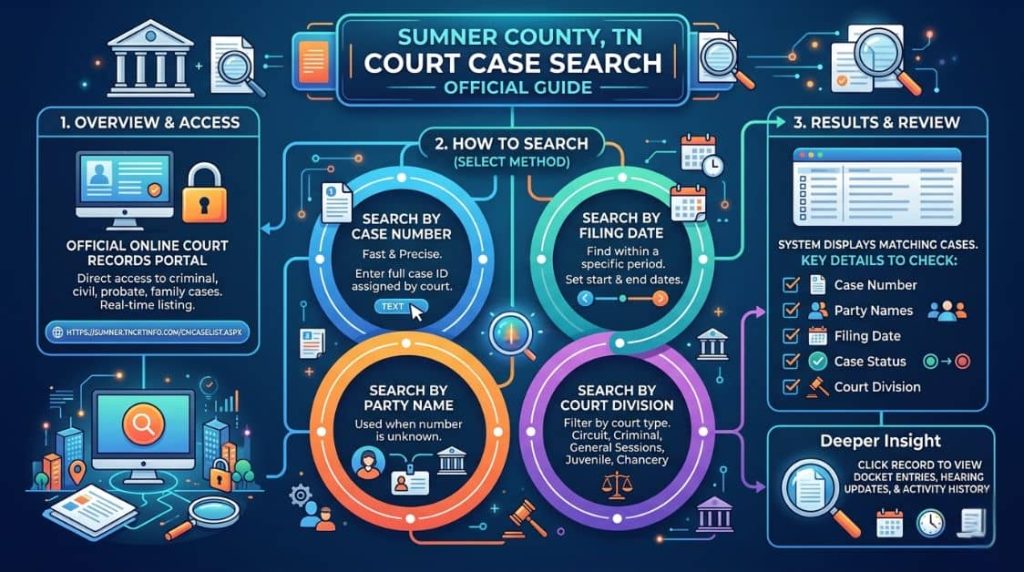
Sumner County, TN, Court Case Search is available through the official online court records portal. This system helps users view case information using filters like case number, party name, filing date, and court division. The online system supports real-time case listing and docket-based search, which helps users find civil, criminal, and traffic-related court records from Sumner County courts.
How to Search Sumner County Court Cases
Users can perform a Sumner County, TN, Court Case Search using different methods based on available information. Each method helps refine results inside the online records system.
Search by Case Number
A case number search is the fastest method when the full case ID is available. Each case has a unique number assigned by the court system.
Steps:
- https://sumner.tncrtinfo.com/cmCaseList.aspx
- Open the case search portal
- Enter the full case number
- Submit the search request
- Review matching case details
This method often shows the most accurate result because case numbers are unique.
Search by Party Name
A party name search is used when the case number is unknown. It helps locate cases using a person’s or business name.
Users can enter:
- First name
- Last name
- Business name (if applicable)
The system may show multiple matches, so adding extra details like year or court type helps narrow results.
Search by Filing Date
A filing date search helps locate cases filed within a specific time period.
Steps:
- Select start date
- Select end date
- Run search
- Review the results list
This method is useful for tracking recent filings or historical case activity.
Search by Court Division
Cases are organized by court divisions in Sumner County.
Divisions include:
- Circuit Court
- Criminal Court
- General Sessions Court
- Juvenile Court
- Chancery Court
Selecting the correct division helps filter unrelated records and improves accuracy.
Reviewing Search Results
After running a search, the system displays a list of matching cases. Each result contains key case details.
Users should check:
- Case number
- Party names
- Filing date
- Case status
- Court division
Clicking a record may show docket entries, hearing updates, and case activity history.
Types of Cases Available Through Sumner County Case Search
The Sumner County Case Search system includes several court case categories, such as civil cases, criminal cases, probate matters, family law matters, and juvenile proceedings. A Sumner County Case Lookup helps users locate case information across different court divisions using available public records. Court records cover many legal matters filed within the county court system. Through a case lookup, users can review case details, filing information, hearing dates, court actions, and party information when records are available for public viewing. The search process supports transparency and helps researchers, residents, attorneys, and journalists locate court-related information more efficiently.
The table below highlights the primary case categories commonly found through a Sumner County Case Lookup:
| Case Type | Common Matters Included |
|---|---|
| Civil Cases | Contract disputes, property disputes, personal injury claims |
| Criminal Cases | Misdemeanors, felonies, arrests, court proceedings |
| Probate Cases | Estates, wills, guardianships, conservatorships |
| Family Court Matters | Divorce, custody, support, parenting plans |
| Juvenile Proceedings | Delinquency cases, dependency matters, child welfare cases |
Civil Court Cases
Civil court cases involve legal disputes between private parties, businesses, organizations, or government entities. These matters typically focus on resolving disagreements rather than determining criminal guilt.
A civil case search may reveal records involving:
- Property disputes
- Contract disagreements
- Personal injury claims
- Debt collection actions
- Small claims matters
Many civil records include filing dates, court orders, motions, judgments, and scheduled hearings. Civil litigation records often form a large portion of county court databases and remain one of the most frequently searched record categories.
Criminal Court Cases
Criminal cases involve alleged violations of state or local laws. These records document court actions related to offenses ranging from minor misdemeanors to serious felony charges.
A criminal case lookup may contain information about:
- Criminal complaints
- Arrest-related court filings
- Charges and case status
- Court appearances
- Sentencing outcomes
Publicly available criminal records help users track case progress and review court proceedings. Certain records may remain restricted if state law limits public disclosure. Criminal case databases often contain docket information, court calendars, hearing schedules, and judicial rulings.
Probate Matters
Probate cases address the legal administration of a person’s estate after death. These records help courts oversee asset distribution and confirm the validity of wills.
Probate matters include:
- Estate administration
- Will validation
- Guardianships
- Conservatorships
- Trust-related filings
Probate court records often contain petitions, court orders, executor appointments, and estate settlement documents. Researchers frequently use probate files for legal and family history purposes.
Family Court Proceedings
Family law matters focus on legal issues affecting family relationships. These proceedings help courts resolve disputes involving spouses, parents, and children.
Family court records may include:
- Divorce proceedings
- Child custody cases
- Child support matters
- Parenting plans
- Adoption-related filings
Some family court documents remain confidential to protect sensitive personal information. Public records usually provide limited case details when privacy laws apply.
Juvenile Court Records
Juvenile proceedings involve legal matters concerning minors. Courts handle these cases separately from adult court proceedings to address the unique needs of young people.
Juvenile court matters may involve:
- Delinquency cases
- Dependency actions
- Child protection proceedings
- Status offenses
- Juvenile supervision matters
Many juvenile records receive special legal protections and are not fully available through public case lookup systems. Courts often restrict disclosure to protect the privacy and future interests of minors. Even so, basic case information may appear when permitted by law and court policy.
Information Available in Court Case Records
Court case records contain structured details about legal matters handled by the court system. These records showcase status, court filings, hearing schedules, and outcomes in a clear format. Court case information supports case tracking and legal reference work. Many systems also apply NLP-based search features that connect keywords with relevant court documents and events. Court records work as a central source for case-related updates. They help users review progress, filings, and final decisions within a single case profile.
Basic Case Details
Basic case details form the foundation of every court record. These entries describe the core identity of a case within the court system.
Case records usually display items such as:
- Case number and filing date
- Case type, such as civil, criminal, or traffic
- Names of involved parties
- Assigned court location
- Case status, like open, closed, or pending
These details support quick recognition of a case within court case information systems. Court databases organize this data in structured fields for fast reference.
Court Filings and Documents
Court filings and documents show the written record submitted during legal proceedings. These files reflect actions taken by both parties and the court.
Court filings include:
- Complaints and petitions
- Motions and responses
- Evidence submissions
- Legal notices and affidavits
Each document records a specific step in the legal process. Court documents also carry timestamps and filing party details. Case management systems index these records so they align with case status updates and procedural history. This structure helps track how a case develops through official submissions.
Hearing Schedules
Hearing schedules list court appearances tied to a case. These entries show when and where legal proceedings take place.
Typical hearing details include:
- Hearing date and time
- Assigned courtroom or virtual link
- Type of hearing, such as motion or trial session
- Assigned judge or magistrate
Hearing information changes as the case progresses. Court systems update schedules when postponements or rescheduling occur. These records help maintain a clear timeline of court activity within the case profile.
Judgments and Dispositions
Judgments and dispositions represent the outcomes recorded by the court. These entries show how a case ends after review and proceedings.
Elements include:
- Final ruling or verdict
- Sentencing details in criminal cases
- Dismissals or settlements in civil matters
- Court orders and enforcement actions
Court filings often reference the judgment section as the final stage of case processing. Disposition records remain part of the permanent case history. These entries help complete the full record of court case information from filing to resolution.
Court Divisions Included in the Search System
Sumner County Case Search pulls records from several court divisions that handle different types of legal matters within the county. The system organizes case data so that case numbers, filings, and court events appear under the correct division. This structure helps support clear retrieval of judicial proceedings across multiple court levels. The search system also uses NLP (Natural Language Processing) patterns to connect queries with relevant docket entries and case records. Each division contributes its own set of legal documents, ranging from civil disputes to criminal hearings and family matters.
Circuit Court Records
Circuit Court Records in Sumner County Case Search cover a wide range of civil and criminal appeals, along with major trial-level cases. This division handles disputes involving contracts, property claims, and higher-value civil matters. Criminal appeals from lower courts also appear in this section. Records typically include case numbers, hearing dates, filings, and final judgments. The Circuit Court functions as a key trial court where formal proceedings take place under structured judicial rules. Case activity often reflects longer proceedings with multiple hearings and motions recorded over time.
Criminal Court Records
Criminal Court Records focus on felony-level cases within the Sumner County Case Search. These records show charges, indictments, court dates, and sentencing outcomes. Prosecutors and defense filings appear as part of the case history. This division handles serious offenses that move beyond preliminary hearings. Each record shows the progression of criminal judicial proceedings from filing to resolution. Case numbers help track each matter through multiple court events. Records remain important for tracing conviction status and case disposition details.
General Sessions Cases
General Sessions Cases include lower-level criminal matters, civil disputes, and preliminary hearings. Sumner County Case Search lists these cases with basic docket entries such as arrest details, bond hearings, and initial filings. This division often serves as the first point for criminal processing. Many cases begin here before moving to higher courts. Civil claims with smaller monetary value also appear in this section. Case records remain shorter in length compared to Circuit or Chancery matters, reflecting early-stage judicial activity.
Chancery Court Matters
Chancery Court Matters in Sumner County Case Search focuses on equity-based disputes. These cases involve probate issues, land disputes, contract enforcement, and family estate matters. The court handles non-monetary relief where fair resolutions are requested. Records include petitions, rulings, and property-related filings. Case entries often involve detailed documentation due to the nature of equity law. Judicial proceedings in this division focus on resolving disputes that require court-directed fairness rather than standard legal damages.
Juvenile Court Proceedings
Juvenile Court Proceedings cover cases involving minors within the Sumner County Case Search. These records include delinquency cases, custody matters, and child welfare hearings. Case information remains limited to protect privacy under court rules. This division focuses on rehabilitation and protective decisions rather than punishment. Records show hearings, supervision orders, and case outcomes related to youth matters. Each entry reflects confidential judicial proceedings designed to address family and minor-related legal issues under structured court oversight.
(FAQ) About Sumner County Case Search
A Sumner County Case Search allows users to review basic court case information such as case status, filings, and hearing details. The Sumner County Case Lookup system pulls judicial records from civil, criminal, and traffic court databases within the county. Below are common questions that help clarify how the process works.
How do I perform a Sumner County case search?
A Sumner County Case Search starts by entering either a party name or a case number into the official court search system. The system then matches the input with available judicial records linked to county courts. Users can review case status, filing history, and docket entries once results appear. Most searches work through simple steps. First, enter the accurate spelling of names or correct case numbers. Next, select the appropriate court type if filters are available. After that, the system displays relevant court case information linked to the request.
Can I search court records online?
Court records in Sumner County can often be searched through online databases provided by court authorities. These platforms allow public viewing of selected judicial records without visiting the courthouse. Many users rely on these systems for quick case status updates. Online Sumner County Case Lookup tools usually show civil, criminal, traffic, and probate case data. However, older records or restricted files may not appear online. Some case details may still require in-person requests at the court clerk’s office.
What information is needed for a case lookup?
A Sumner County Case Lookup works best when accurate details are provided. The system uses this data to match records stored in the court database. Even small errors can affect search results. Common details include full names, case numbers, or filing dates. Court division and county location can also help refine results. These inputs improve the accuracy of court case information and reduce irrelevant matches.
Are criminal court records publicly available?
Many criminal court records in Sumner County are part of public judicial records. These records often include case status updates, charges, hearing dates, and final judgments. Users can review them through official court case information systems. Some criminal records remain restricted. Sealed cases, juvenile records, and expunged files are not shown in standard searches. These restrictions exist to protect privacy and follow court rules.
Can I search by case number?
A Sumner County Case Search by case number offers one of the fastest ways to find exact records. Each case number is unique and directly linked to specific judicial records. This reduces the chance of unrelated results. When a valid case number is entered, the system displays full case details. These may include docket entries, filing history, court events, and current case status. Even a single incorrect digit can prevent results from appearing.